Before ice cream had a name, civilizations across the world were already enjoying it — each culture shaping cold sweetness through its own flavors, traditions, and creations.
Before Ice Cream Had a Name
Long before modern freezers, ice cream shops, and chocolate-coated cones existed, humanity was already dreaming about cold sweetness.
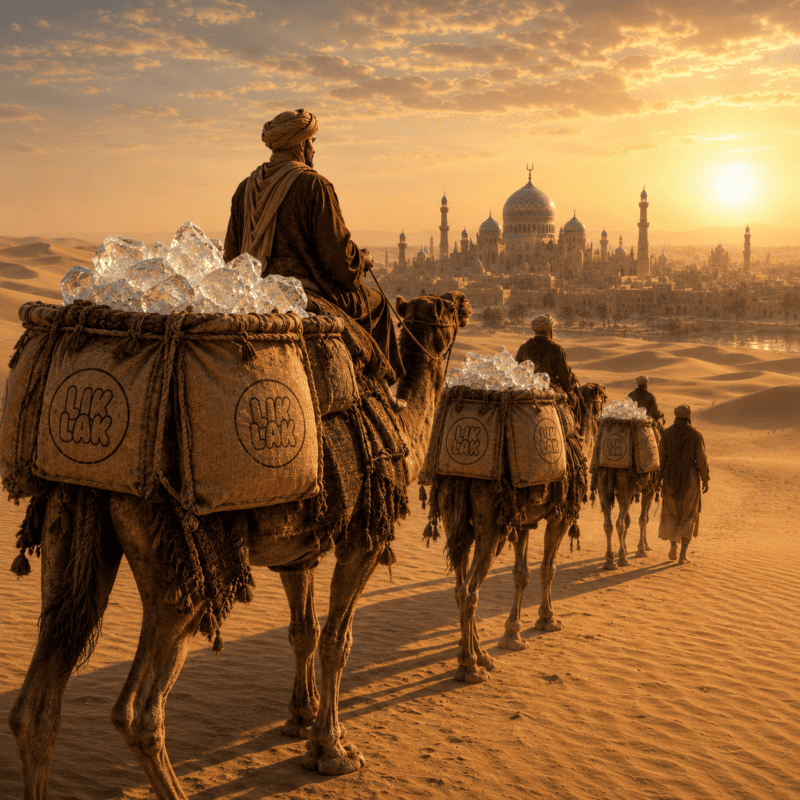
Under the burning sun of ancient deserts, people searched for relief in one of the rarest and most magical treasures nature could offer: ice.
Thousands of years ago, snow was not ordinary.
It was precious. Valuable. Almost mythical.
In the ancient world, servants climbed mountains to collect snow and transport it across long distances, wrapping it carefully in cloth and storing it underground to preserve its coldness beneath the desert heat. What melted in minutes under the summer sun became a luxury reserved for kings, queens, nobles, and royal celebrations.
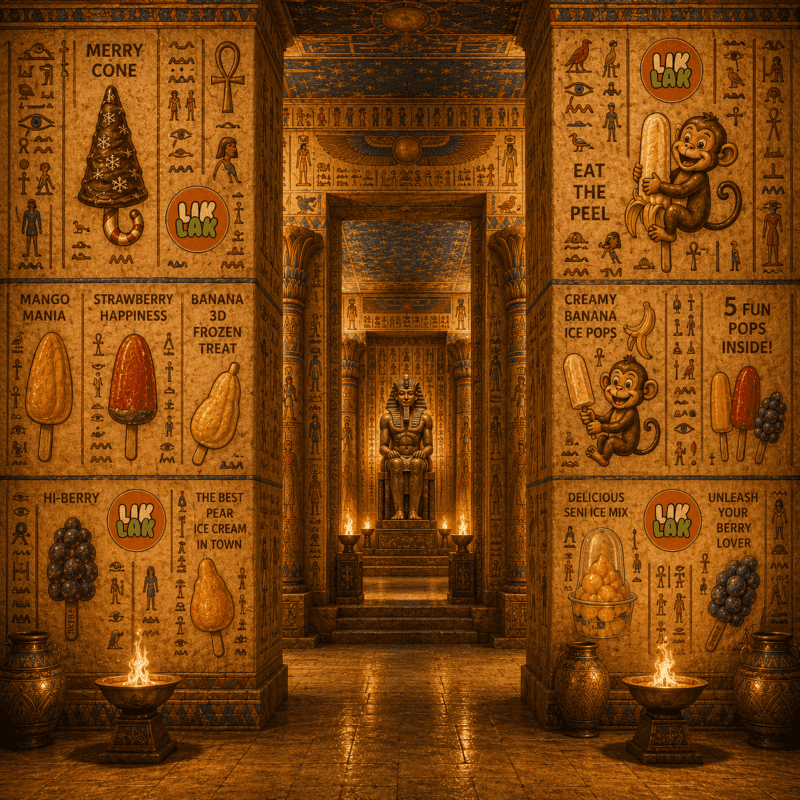
In Ancient Egypt, during the golden age of the pharaohs, chilled fruit delicacies flavored with honey, dates, figs, pomegranate, and citrus were served in elegant bowls beside the Nile. The contrast between the intense desert heat and the refreshing cold created an experience unlike anything people had ever known.
People did not yet call it ice cream.
But the feeling already existed.
It was the feeling of refreshment after heat.
Sweetness after exhaustion.
Pleasure shared during celebration.
Far away, across mountains and empires, other civilizations were discovering similar ideas. Humanity slowly learned that frozen desserts were more than food — they carried emotion, luxury, creativity, and joy.
The story of ice cream did not begin inside factories or modern kitchens.
It began with nature itself:
snow from mountains, crushed ice, fruits, honey, milk, flowers, and imagination.
But the real revolution would arrive in the lands of Persia.
More than 2,000 years ago, Persian civilization transformed frozen desserts into an art of science and elegance. Through remarkable underground cooling structures known as Yakhchāl, Persians mastered the preservation of ice even during extremely hot summers.
In royal gardens and palace gatherings, Persians created refreshing frozen delicacies infused with:
rose water,
saffron,fruit syrups,vermicelli-like noodles,honey,and natural floral flavors.
These creations became the ancestors of modern sorbet and ice cream — elegant desserts deeply connected to fruits, flowers, and refinement.
Persia did not simply enjoy ice.
It learned how to master it.
As centuries passed, the Arab world carried this frozen legacy even further. During the Islamic Golden Age, Arab scientists, traders, and chefs transformed frozen desserts into something richer, creamier, and more sophisticated.
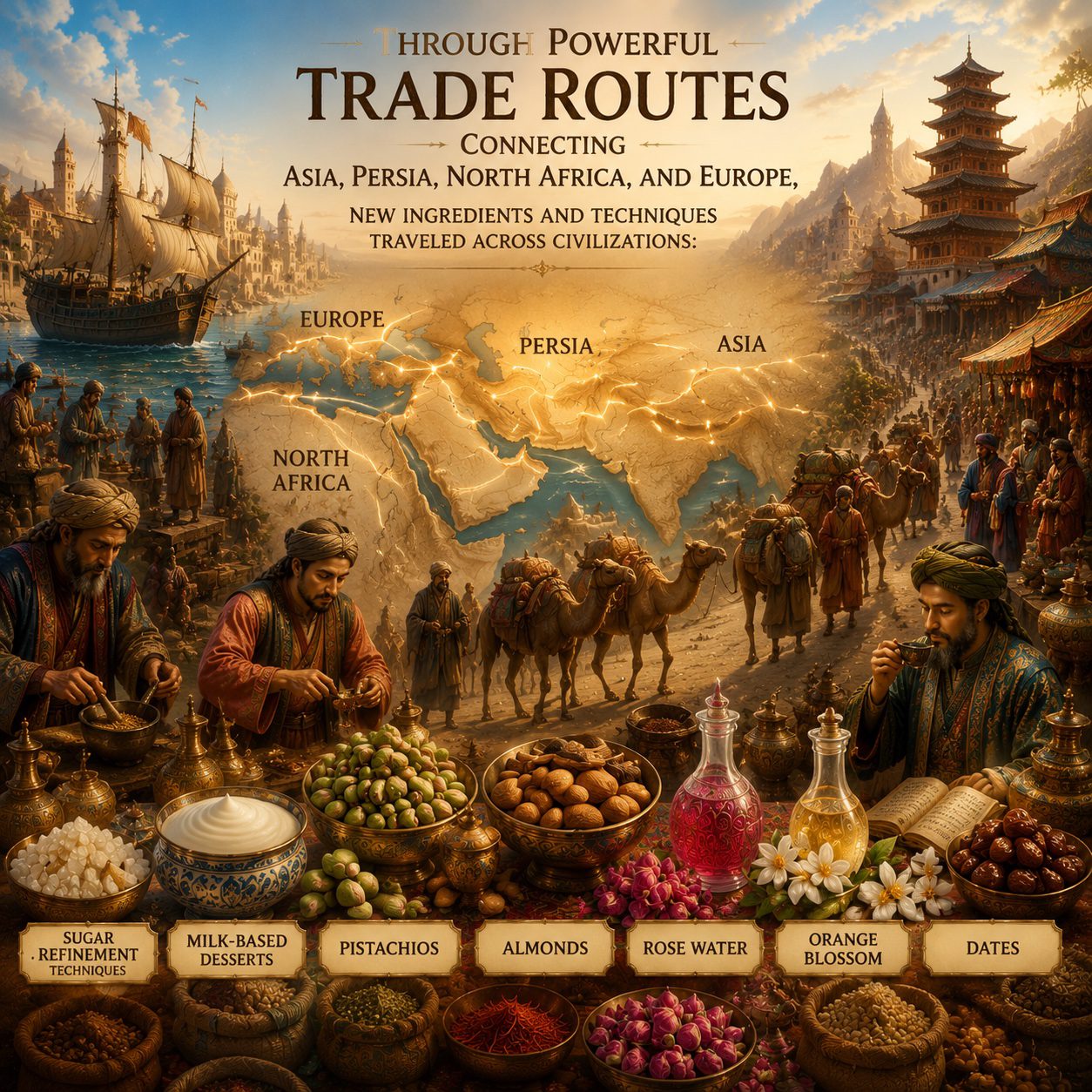
Through powerful trade routes connecting Asia, Persia, North Africa, and Europe, new ingredients and techniques traveled across civilizations:
sugar refinement,
milk-based frozen desserts,
pistachios,
almonds,
orange blossom,
dates,
and rose water.
What once began as chilled fruit mixed with mountain snow slowly evolved into a luxurious culinary art form.
The Arab world helped spread these frozen creations across the Mediterranean, eventually influencing Europe and contributing to the birth of modern gelato and ice cream.
Today, ice cream continues to evolve, inspired by centuries of culture, imagination, and creativity.
From Ancient Egypt…
to the Persian Empire…
to the flourishing Arab world…
the passion for frozen desserts has always connected people through happiness, celebration, and the simple joy of sweetness shared together.
And after thousands of years, the story of ice cream is still being written.